
Work out how much to feed your pet.
Photo credits
- Alexandrine parakeet: Charles J. Sharp, CC BY-SA 4.0, via Wikimedia Commons (source)
- American Pit Bull Terrier: https://www.flickr.com/people/geoggirl/, CC BY 2.0, via Wikimedia Commons (source)
- Angora rabbit: Ross Little, CC BY-SA 2.0, via Wikimedia Commons (source)
- Aseel: Salmanrockx, CC BY-SA 4.0, via Wikimedia Commons (source)
- Australorp: JTdale, CC BY 3.0, via Wikimedia Commons (source)
- Beagle: , CC BY-SA 3.0, via Wikimedia Commons (source)
- Belgian Malinois: Canarian, CC BY-SA 3.0, via Wikimedia Commons (source)
- Bengal cat: User:Lightburst, CC BY-SA 4.0, via Wikimedia Commons (source)
- British Shorthair: BritishEmpire, CC BY-SA 3.0, via Wikimedia Commons (source)
- Budgerigar: Benjamint444, GFDL 1.2, via Wikimedia Commons (source)
- Bully Kutta: Nicolas2200, CC0, via Wikimedia Commons (source)
- Cockatiel: Photo by: Ganatron – paulweberphoto.com, CC BY-SA 4.0, via Wikimedia Commons (source)
- Commercial brown layer hens: Mercoaves, CC BY-SA 4.0, via Wikimedia Commons (source)
- Desi hen and rooster: Andrei Niemimäki from Turku, Finland, CC BY-SA 2.0, via Wikimedia Commons (source)
- Desi pigeon: william_stephens, CC BY 4.0, via Wikimedia Commons (source)
- Dobermann: Miroslav Cacik, Copyrighted free use, via Wikimedia Commons (source)
- Dwarf hamster: Bullet, CC BY-SA 3.0, via Wikimedia Commons (source)
- English Cocker Spaniel: Jean-Pol GRANDMONT, CC BY 4.0, via Wikimedia Commons (source)
- Fayoumi: Joe Mabel (on Flickr as Joe Mabel from Seattle, US), CC BY-SA 3.0, via Wikimedia Commons (source)
- Flemish Giant rabbit: Lucile Petit, Public domain, via Wikimedia Commons (source)
- Gaddi Kutta: Shyamal L., CC BY-SA 3.0, via Wikimedia Commons (source)
- German Shepherd: gomagoti, CC BY-SA 2.5, via Wikimedia Commons (source)
- Golden Retriever: Dukedestiny01.jpg: "Janneke Vreugdenhil" derivative work: Anka Friedrich ([[User, Public domain, via Wikimedia Commons (source)
- Goldfish: לינה אבוגוש, CC BY-SA 3.0, via Wikimedia Commons (source)
- Grey parrot: Florettesokeng, CC BY-SA 4.0, via Wikimedia Commons (source)
- Guinea pig: , CC BY-SA 3.0, via Wikimedia Commons (source)
- Guppy tropical fish: Per Harald Olsen, CC BY 3.0, via Wikimedia Commons (source)
- High flyer tippler pigeon: jim gifford, CC BY-SA 2.0, via Wikimedia Commons (source)
- Himalayan cat: Cindy See, CC BY-SA 2.0, via Wikimedia Commons (source)
- King pigeons: Graham Manning, CC BY-SA 3.0, via Wikimedia Commons (source)
- Labrador Retriever: IDS.photos from Tiverton, UK, CC BY-SA 2.0, via Wikimedia Commons (source)
- Lakha fantail pigeon: jim gifford, CC BY-SA 2.0, via Wikimedia Commons (source)
- Maine Coon: , CC BY-SA 4.0, via Wikimedia Commons (source)
- Mini Lop: MiniLop1234, CC BY-SA 4.0, via Wikimedia Commons (source)
- Mixed breed rabbit: Friedrich Haag, CC BY-SA 4.0, via Wikimedia Commons (source)
- Mixed or desi dog: Biswarup Ganguly, CC BY-SA 3.0, via Wikimedia Commons (source)
- Mixed or desi tabby cat: Bertramz, CC BY-SA 3.0 de, via Wikimedia Commons (source)
- Netherland Dwarf rabbit: 金色黎明, CC BY-SA 4.0, via Wikimedia Commons (source)
- New Zealand rabbit: No machine-readable author provided. Hagen Graebner assumed (based on copyright , CC BY-SA 2.5, via Wikimedia Commons (source)
- Persian cat: The original uploader was Lajoma at Finnish Wikipedia., CC BY-SA 3.0, via Wikimedia Commons (source)
- Pomeranian dog: Blackoranges, Public domain, via Wikimedia Commons (source)
- Racing homer pigeon: Patrick Edwin Moran, Public domain, via Wikimedia Commons (source)
- Ragdoll: Simone Johnsson, CC BY-SA 2.0, via Wikimedia Commons (source)
- Rhode Island Red: HeatherLion, CC BY-SA 3.0, via Wikimedia Commons (source)
- Rose-ringed parakeet: danielskatz, CC BY 4.0, via Wikimedia Commons (source)
- Rosy-faced lovebird: Charles J. Sharp, CC BY-SA 4.0, via Wikimedia Commons (source)
- Rottweiler: Dr. Manfred Herrmann Allgemeiner Deutscher Rottweiler-Klub (ADRK) e.V. http://ww, CC BY-SA 3.0, via Wikimedia Commons (source)
- Shih Tzu: Canino21, Public domain, via Wikimedia Commons (source)
- Siamese cat: Whitepatrick, CC BY-SA 4.0, via Wikimedia Commons (source)
- Siberian Husky: xJaM (talk · contribs), CC BY-SA 3.0, via Wikimedia Commons (source)
- Silkie bantam hen: Camille Gillet, CC BY-SA 4.0, via Wikimedia Commons (source)
- Syrian hamster: Adamjennison111 at English Wikipedia, CC BY 2.5, via Wikimedia Commons (source)
- Zebra finch: see source, CC BY 2.5, via Wikimedia Commons (source)
Showing the guide for . Pick another pet or breed above and this page changes to match.
How to use the pet food calculator
- Choose your pet at the top, then tap its breed or type. This guide changes to match, so everything below is about the pet you picked.
- Enter its weight and age. For cats and dogs, also say whether it is neutered, how active it is and its body shape.
- Pick the food you use. Zoran foods show today's price and pack size, so the monthly cost and number of packs work out by themselves. For any other food, enter the calories from the bag.
- Read the daily amount, split it into the meals shown, and share the result on WhatsApp with whoever feeds your pet.
What the calculator works out
The Zoran pet food calculator is free and needs no sign-up. It covers cats, dogs, parrots and other pet birds, pigeons, baby birds being hand-fed, hens, rabbits, guinea pigs, hamsters and aquarium or pond fish. From the breed, weight, age, activity and food, it works out:
- the daily amount of food in grams, split into meals;
- daily calories for cats and dogs, using the standard veterinary formula;
- daily water;
- for Zoran foods, the monthly cost at today's price, how long a pack lasts and how many packs to buy a month.
Some typical results:
| Pet | Details | Result |
|---|---|---|
| Adult cat | 4 kg, neutered, indoors, normal activity, dry food of 3,500 kcal per kg | 68 g a day (238 kcal) in 2 meals of 34 g; about 200 ml of water |
| Kitten | 3 months old, 1.5 kg, kitten food of 3,900 kcal per kg | 73 g a day (285 kcal) in 4 meals |
| Adult dog | 15 kg, neutered, daily walks, dry food of 3,500 kcal per kg | 245 g a day (854 kcal) in 2 meals; about 825 ml of water |
| Labrador | 30 kg, neutered, daily walks, dry food of 3,500 kcal per kg | 410 g a day (1,436 kcal) in 2 meals |
| Budgie | 35 g, normal (not breeding or moulting) | 5.3 to 7.0 g of seed or pellets a day |
| Laying desi hen | Kept in a coop | 95 to 115 g of layer feed a day |
| Adult rabbit | 2 kg | 24 to 40 g of pellets a day, unlimited hay, about 240 ml of water |
Feeding a desi or mixed-breed cat

Desi cats are Pakistan's most common pet cats: hardy, usually 3 to 5 kg as adults, and often adopted from the street or a neighbour's litter. Because many start life on scraps, they are often thin, wormy or carrying fleas when they arrive.
Deworm a new cat first, then feed a complete cat food for its weight and age. Expect a rescued cat to eat a little more than the calculator shows for the first few weeks while it regains condition; choose "Thin" in body shape until you can feel the ribs under a light layer of fat. Neuter at about 5 to 6 months: neutered desi cats need about a fifth less food and roam less.
Feeding a Persian cat

Persians are the best-loved pedigree cat in Pakistan, often sold as "triple coat" or "punch face". Adults usually weigh 3 to 5.5 kg. They are calm, mostly indoor cats, so they gain weight easily on the amounts printed on many bags.
Their flat faces make it hard to pick up small, round kibble, so many do better with a flatter or larger kibble or some wet food. Daily brushing cuts the hairballs that make Persians vomit, and a hairball or fibre-rich food helps too. Persians are prone to kidney disease, so encourage drinking with wet food and a wide water bowl. In summer, keep them in the coolest room: their short noses make it harder to cool down.
Feeding a Himalayan cat

Himalayans are Persians with the colourpoint markings of a Siamese: a pale body with darker face, ears, legs and tail. They are just as calm and fluffy, weigh 3 to 5.5 kg and need the same care as Persians.
Feed for an indoor, low to normal activity cat, measure every meal and keep treats small. Choose a kibble shape that a flat face can pick up, brush every day to limit hairballs and make sure they drink enough. Like Persians, they feel Pakistan's summer heat badly.
Feeding a Siamese cat

Siamese cats are slim, long-bodied, talkative and very active, usually 2.5 to 5 kg. A Siamese with visible hip bones and a lean waist can be perfectly healthy: they are built light. Do not overfeed just to make one look "fuller".
Active, playful Siamese often need the "Very active" setting. They do well on a high-protein food and two to three meals a day, and many enjoy food puzzles that slow them down.
Feeding a British Shorthair
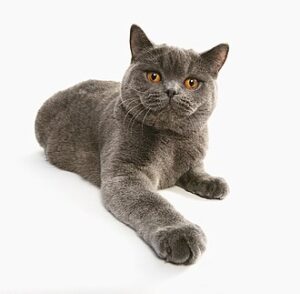
British Shorthairs are stocky, round-faced cats with dense coats, weighing 4 to 8 kg. They are quiet and not very active, and they are one of the breeds most likely to become overweight.
Measure meals carefully, choose "Low" or "Normal" activity, and keep treats to a minimum. They mature slowly, until about 3 years, so a young British cat may still be filling out. Two meals a day suits most; a puzzle feeder keeps them busy.
Feeding a Maine Coon
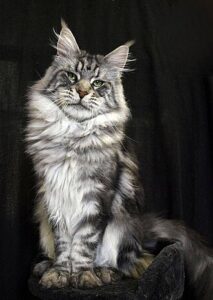
Maine Coons are among the largest cat breeds, with males often 6 to 11 kg. They keep growing until about 3 to 4 years old, so their food needs change for longer than other cats.
Many owners keep them on a kitten or all life stages food until about 18 months. Large kibble suits their jaws. Recalculate every few months as they grow, and check the body shape rather than chasing a weight number: a lean Maine Coon is healthier than a heavy one.
Feeding a Bengal cat

Bengals have a wild, spotted look and the energy to match. Most weigh 3.5 to 7 kg and are lean and muscular. They need lots of play and often the "Very active" setting.
A high-protein food suits them, and some have sensitive stomachs, so change foods slowly over 10 days. Many Bengals love water and will play in their bowl; give a heavy bowl or a fountain.
Feeding a Ragdoll cat

Ragdolls are large, gentle cats, 4.5 to 9 kg, that go limp when held. They are calm and usually live indoors, so they can gain weight steadily if fed by the bag chart.
They grow slowly until about 4 years. Feed for normal or low activity, weigh monthly and keep treats small. Their semi-long coat needs brushing a few times a week.
Cat feeding chart by weight
Daily amounts for healthy adult cats on a dry food of 3,500 kcal per kg. For kittens, pregnant or nursing cats, other foods and overweight cats, use the calculator above.
| Cat's weight | Calories a day (neutered, indoors) | Dry food a day (neutered, indoors) | Dry food a day (not neutered or very active) |
|---|---|---|---|
| 2 kg | 141 kcal | 40 g | 47 g |
| 3 kg | 191 kcal | 55 g | 64 g |
| 4 kg | 238 kcal | 68 g | 79 g |
| 5 kg | 281 kcal | 80 g | 94 g |
| 6 kg | 322 kcal | 92 g | 105 g |
| 7 kg | 361 kcal | 105 g | 120 g |
How much should I feed my cat?
It depends on your cat's weight, age, activity and the calories in its food, not on the size of the bowl. A healthy 4 kg neutered adult cat that lives indoors needs about 240 kcal a day. On a dry food with about 3,500 kcal per kg, that is roughly 68 g a day, given as two meals of 34 g.
Weigh the food with a kitchen scale for the first week. A "cup" of kibble can weigh anywhere from 80 to 120 g, which is enough to make a cat fat over a year. See our cat food range and our guide to the best cat food in Pakistan.
Feeding kittens
Kittens need two to three times as much energy per kg as adults. Under 4 months, give 4 small meals a day; from 4 to 12 months, 3 meals. Use a kitten food or an "all life stages" food until 12 months, because adult food does not have enough protein, calcium and energy for growth.
Weigh a kitten every week and recalculate. Healthy kittens gain about 100 g a week in the first months. A kitten that stops gaining, has a swollen belly or loose stools usually needs deworming, which is very common in Pakistan.
Dry food, wet food and water
Cats come from desert ancestors and do not feel thirsty easily, so many drink too little, especially on dry food alone. A healthy cat needs about 50 ml of water per kg a day. Wet food is about 80% water, so replacing a quarter or half of the meals with wet food is an easy way to keep the kidneys and bladder healthy.
Use a wide, shallow bowl away from the food and litter box, and change the water at least once a day. In summer, a second bowl or a water fountain helps.
Home food for cats: milk, chicken, rice and roti
Plain boiled chicken or fish, with no salt, spices or bones, is a fine treat. Rice and roti are not harmful in small amounts, but cats cannot live on them: they need taurine and other nutrients found in meat and in complete cat food.
Most adult cats cannot digest the lactose in cow or buffalo milk (doodh) and get diarrhoea from it, even if they drink it happily. Water is the right drink. Never give onion, garlic, chocolate, grapes, cooked bones, or salty and spicy salan.
Cats in Pakistan's summer and winter
In summer heat above 35 °C, cats eat less and sleep more. Feed in the cooler morning and evening, keep food out of the sun and take away wet food within an hour or two. Long-haired cats such as Persians struggle most: keep them in a cool room in the afternoon and comb out loose fur.
In winter, outdoor and very active cats may need about 10% more food. Indoor cats in heated rooms do not.
Feeding a desi or mixed-breed dog
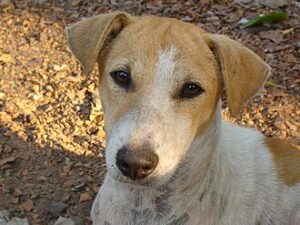
Desi dogs are Pakistan's native street and village dogs: tough, alert, usually 15 to 25 kg and well suited to the heat. Many are fed roti and leftovers, which keeps them alive but often leaves them thin, with a dull coat.
Deworm first, then feed a complete dog food for their weight. A desi dog guarding a house or farm at night usually needs the "Active" or "Working" setting. Mixed breeds vary a lot in size, so go by body shape: you should feel the ribs easily and see a waist.
Feeding a German Shepherd
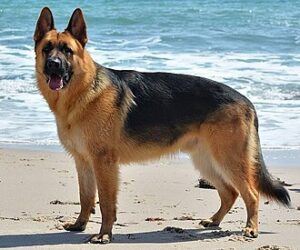
German Shepherds are among Pakistan's most popular guard dogs. Adults weigh 22 to 40 kg and are active, intelligent and hungry. As a large, deep-chested breed they can get bloat, where the stomach twists: give 2 to 3 smaller meals, avoid exercise for an hour after eating and do not let them gulp water after a run.
Puppies need a large-breed puppy food until about 12 to 18 months and should stay lean while growing to protect their hips and elbows. Their thick double coat makes summer hard: feed in the cool hours and keep them in shade.
Feeding a Labrador
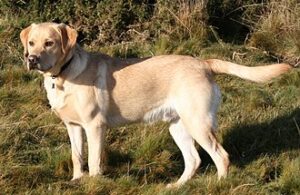
Labradors weigh 25 to 36 kg and are famous for loving food. Many carry a gene that makes them feel hungry all the time, so they are one of the breeds most likely to become overweight.
Weigh every meal, count treats and home food, and do not go by begging. A lean Labrador lives about two years longer on average than an overweight one. Large-breed puppy food until 12 to 15 months helps steady growth.
Feeding a Golden Retriever

Golden Retrievers weigh 25 to 34 kg and, like Labradors, gain weight easily. They need daily exercise and a measured diet.
Use a large-breed puppy food until about 12 to 15 months, keep them lean while growing, and brush their long coat regularly. In Pakistani summers, walk them only early and late in the day and keep fresh water nearby.
Feeding a Siberian Husky

Huskies weigh 16 to 27 kg and were bred to pull sleds in the cold on little food. They are efficient eaters and often need less than their size and energy suggest.
Pakistan's heat is the biggest challenge: above 30 °C, keep them indoors with a cooler or AC, feed early morning and late evening, and never exercise them in the afternoon. Many huskies eat less in summer; that is normal if they stay at a healthy weight.
Feeding a Rottweiler

Rottweilers are powerful guard dogs, 35 to 60 kg as adults. They grow fast in the first year and need a large or giant-breed puppy food and careful portions to protect their joints.
Give 2 to 3 smaller meals to reduce the risk of bloat and rest them after eating. Adult Rottweilers gain weight easily if not exercised, so keep them lean and muscular.
Feeding a Bully Kutta

The Bully Kutta is Pakistan's own giant mastiff, often 60 to 90 kg. It grows slowly until about 2 years and needs a giant-breed puppy food until then, fed in measured amounts so it grows steadily rather than fast.
Split the day's food into 2 to 3 meals and rest the dog for an hour after eating, because giant breeds are at high risk of bloat. Bully Kuttas handle heat better than many large breeds but still need shade and water in summer.
Feeding a Gaddi Kutta

The Gaddi is a large mountain guardian from the Himalayan foothills, 35 to 55 kg, with a thick coat. It is calm and protective and often guards livestock.
Working Gaddis need the "Working" setting. In the plains, summer heat is hard on this breed: feed in the cool hours, keep it in deep shade and give plenty of water. Like other large breeds, use 2 to 3 smaller meals.
Feeding a Doberman

Dobermans are sleek, fast guard dogs, 30 to 45 kg. They should look lean and muscular, with a defined waist.
As a deep-chested breed they can get bloat: give 2 to 3 smaller meals and rest them after eating. Some Dobermans have heart problems, so keep them at a healthy weight and ask your vet about regular checks.
Feeding a Pit Bull
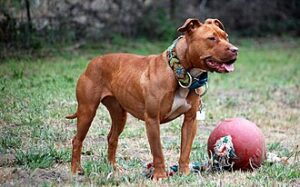
Pit Bulls are muscular, athletic dogs, 14 to 30 kg. They need daily exercise and a food with good protein to keep their muscle.
Many have sensitive skin: a food with fish or lamb and added omega oils can help. Keep them lean, with a visible waist, as extra weight strains their joints.
Feeding a Belgian Malinois
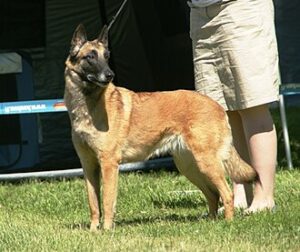
The Belgian Malinois is a high-energy working dog used by police and security teams, 20 to 30 kg. Working Malinois often need 1.5 to 2 times the food of a pet dog of the same weight.
Use the "Working" setting for dogs in training or on duty and a performance food. Feed the larger meal after work, and keep them in the shade in summer.
Feeding a Beagle
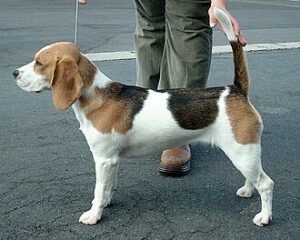
Beagles are small hounds, 9 to 14 kg, with a strong nose and a big appetite. They will eat anything they find, so they gain weight quickly and get into the rubbish bin.
Measure meals, keep food out of reach and use part of the day's food for training. A slow-feeder bowl helps them eat more slowly.
Feeding a Cocker Spaniel

Cocker Spaniels weigh 12 to 15 kg and love their food. They gain weight easily, which also makes ear and skin problems worse.
Measure meals, choose a food with omega oils for the coat, and use a narrow, deep bowl so their long ears stay out of the food.
Feeding a Shih Tzu

Shih Tzus are small companion dogs, 4 to 7.5 kg, with flat faces and long coats. They need small kibble that is easy to pick up and chew, and 2 to 3 small meals a day.
Small breeds are prone to dental disease, so dry food and dental chews help. Keep the hair around the mouth trimmed or tied back so it stays clean after meals.
Feeding a Pomeranian

Pomeranians are toy dogs, 1.5 to 3.5 kg, with fluffy coats that hide their small frame. Their tiny stomachs mean small, frequent meals: puppies need 3 to 4 meals a day because they can get low blood sugar if they skip food.
Use a small-breed food with small kibble. Even a few extra treats add up quickly for a dog this size, so count everything.
Dog feeding chart by weight
Daily amounts for healthy adult dogs on a dry food of 3,500 kcal per kg. For puppies, seniors, working dogs, other foods and overweight dogs, use the calculator above.
| Dog's weight | Calories a day (neutered, daily walks) | Dry food a day (neutered, daily walks) | Dry food a day (active: long runs, play) |
|---|---|---|---|
| 5 kg | 374 kcal | 105 g | 135 g |
| 10 kg | 630 kcal | 180 g | 225 g |
| 15 kg | 854 kcal | 245 g | 305 g |
| 20 kg | 1,059 kcal | 305 g | 380 g |
| 25 kg | 1,252 kcal | 360 g | 445 g |
| 30 kg | 1,436 kcal | 410 g | 515 g |
| 40 kg | 1,781 kcal | 510 g | 635 g |
| 50 kg | 2,106 kcal | 600 g | 750 g |
How much should I feed my dog?
A 15 kg neutered adult dog that gets daily walks needs about 850 kcal a day, which is about 245 g of a 3,500 kcal per kg dry food. Guard and farm dogs that work all day can need nearly twice as much, while lazy dogs and older dogs need less.
Weigh the food rather than using a cup, and count treats and home food as part of the day. See our dog food range.
Feeding puppies
Puppies under 4 months need about three times their adult resting energy, so feed them 4 meals a day, then 3 meals until about 6 months and 2 meals after that. Use a puppy food until 12 months for most breeds.
Large and giant breeds such as the German Shepherd, Labrador, Rottweiler and Bully Kutta keep growing until 15 to 24 months. Use a large-breed puppy food and keep them lean: a puppy that grows too fast is more likely to have hip and elbow problems later.
Home food for dogs: roti, rice, doodh and bones
Many dogs in Pakistan are fed roti soaked in milk or leftover salan. A little plain roti, rice or boiled chicken is fine, but these meals are low in protein, calcium and vitamins, and spicy, salty or oily salan upsets the stomach. Keep home food to about a tenth of the day and let a complete dog food do the rest.
Never give cooked bones (they splinter), onion, garlic, grapes, raisins, chocolate, or sweets with xylitol. Many adult dogs also get loose stools from milk.
Guard, farm and working dogs
Dogs that guard a house all night, work with livestock or run alongside a motorbike burn far more energy than a house pet. Choose "Working" in the calculator: this can mean 1.5 to 2 times the food of a pet dog the same size. Feed the larger meal after work, not before, and keep fresh water at the gate or kennel.
Dogs in Pakistan's summer and winter
In summer, feed early in the morning and after sunset, keep water in the shade and refill it often. Thick-coated breeds such as the Husky, Gaddi and German Shepherd overheat quickly. Never walk or exercise a dog in the afternoon heat, and never feed a large meal right before or after hard exercise.
Outdoor dogs in Punjab and the north need about 10 to 15% more food in December and January.
Feeding a budgie
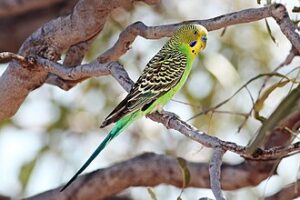
Budgies, called Australian parrots in Pakistan, weigh 30 to 40 g and are the most common pet bird in the country. Each eats about 5 to 7 g of seed or pellets a day, roughly 1.5 teaspoons.
Budgies kept on seed alone often get fat and develop liver problems, so add fresh greens daily: palak, methi, dhania, carrot and cucumber. Millet spray is a treat, not a meal. Breeding pairs need egg food and a cuttlebone for calcium.
Feeding lovebirds

Lovebirds, including Fischer's and peach-faced, weigh 45 to 60 g and are widely bred in Pakistan. Each eats about 7 to 10 g of seed or pellets a day.
Females in breeding lay many eggs and need extra calcium (cuttlebone, crushed eggshell) and soft egg food to avoid egg-binding. Add fresh greens and vegetables every day, and limit sunflower seeds, which are fatty.
Feeding finches

Zebra, Gouldian and society finches weigh 12 to 20 g and eat small seeds: kangni, small millets and canary seed. Each needs about 2 to 4 g a day.
Unlike parrots, finches swallow some seed whole and benefit from a little fine grit. Give egg food when they are breeding, and fresh greens such as chopped lettuce, palak or sprouted seed. Gouldians are more delicate and need extra care in heat and cold.
Feeding a cockatiel

Cockatiels weigh 80 to 110 g and eat about 11 to 14 g of seed or pellets a day, roughly a tablespoon. They love sunflower seeds but should get them only as a small part of the diet, because they are fatty.
A mix of pellets and seed with fresh vegetables daily suits most cockatiels. Offer broccoli, carrot, shimla mirch and greens; many cockatiels need time to accept new foods, so offer them again and again.
Feeding a ringneck parrot

The Indian ringneck, the green parrot or tota, is native to Pakistan and weighs 110 to 140 g. Each eats about 14 to 18 g of seed or pellets a day.
Ringnecks do best with pellets or a quality seed mix as the base and plenty of fresh food: guava, pomegranate, apple, carrot, peas, corn and hari mirch. Avoid an all-sunflower diet, and give them things to chew.
Feeding an Alexandrine parrot

The Alexandrine, or raw tota, is a large native parakeet of 200 to 300 g with a powerful beak. Each eats about 20 to 30 g of food a day.
Give pellets or a large-parrot seed mix as the base, plus fresh fruit, vegetables and a few nuts such as unsalted almonds or walnuts in the shell for chewing. Alexandrines are strong chewers and need wooden toys and fresh branches from safe trees such as guava or neem.
Feeding an African grey

African greys weigh 400 to 500 g and are one of the most intelligent parrots. Each eats about 30 to 45 g of food a day.
Greys are prone to low calcium and vitamin A, especially on seed-heavy diets. Use pellets as the base, with seeds as a smaller part, and add dark leafy greens, carrot, sweet potato and a calcium source. They also need daily time out of the cage and natural light.
How much should I feed my bird?
Small birds eat a large share of their body weight every day. A budgie (Australian parrot) eats about 5 to 7 g of seed or pellets a day, a cockatiel about 11 to 14 g and a ringneck about 14 to 18 g, plus fresh food. Bowls often look full when they hold only empty husks, so blow the husks off before deciding to refill.
See our bird products.
Seeds, pellets and fresh food
Seed mixes sold in Pakistan are usually built on kangni (foxtail millet), bajra, chena (proso millet), canary seed and sunflower. Seeds are fine as a base for small birds but are high in fat and low in vitamin A, so an all-seed diet slowly causes liver and breathing problems.
Make about a quarter of the diet fresh: palak, methi, carrot, cucumber, shimla mirch, hari mirch, peas and a little fruit such as guava or apple. Larger parrots do best with pellets as the base.
Foods that are dangerous for birds
- Avocado, chocolate, tea and coffee: these can kill a bird.
- Salty, fried or spicy salan, namkeen and chips.
- Onion and garlic, raw or cooked.
- Apple and mango seeds, and mouldy bread or seed.
- Fumes from non-stick pans heated very hot: keep birds out of the kitchen.
Birds in Pakistan's summer heat
Above 35 °C, birds pant, hold their wings away from the body and drink much more. Keep the cage out of direct sun and away from closed verandas and glass windows, give fresh water twice a day and a shallow dish to bathe in. Take fresh food out within 2 to 4 hours before it spoils.
Feeding desi pigeons

Desi pigeons weigh about 300 to 350 g and are the most commonly kept pigeons in Pakistan. Each eats about 28 to 35 g of grain a day.
A mix of wheat, maize, bajra and pulses such as moong or masoor, with grit and minerals, keeps them in good condition. Feed twice a day what they finish in 15 to 20 minutes.
Feeding high-flying pigeons
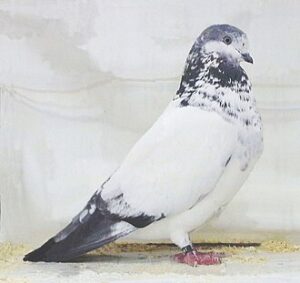
High flyers such as the Teddy, Kabli and other flying breeds are kept for Pakistan's flying contests, where birds stay in the air for many hours. They weigh about 250 to 300 g.
Before a contest, fanciers give a light, easily digested feed and less water late in the evening; after flying, a richer feed with more pulses and some fat to recover. Electrolytes in the water after a long hot flight help. Do not overfeed between contests: heavy birds fly poorly.
Feeding racing homers

Racing homers weigh about 400 to 500 g and need high energy for long flights. Each eats about 35 to 45 g a day in the racing season.
Use a racing mix with grains, pulses and some fatty seeds such as sunflower or flax before long races. Keep them lighter in the off-season, and give more protein during moult.
Feeding Lakha pigeons

Lakha pigeons, or fantails, are show birds with large, upright tails, about 350 to 450 g. They fly little, so they need less energy than flying breeds and gain weight easily.
Feed a balanced grain and pulse mix in measured amounts and keep the loft clean and dry so the tail feathers stay in good condition.
Feeding King pigeons
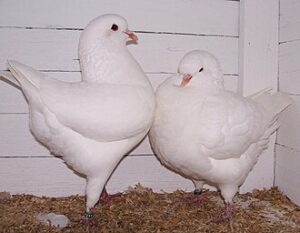
King pigeons are heavy pigeons of 600 to 700 g, kept for show and breeding. They are slow flyers and eat about 45 to 55 g a day.
They need a good protein level for their size, especially when breeding, but gain weight easily if overfed. Larger grains such as maize and peas suit them.
How much grain does a pigeon eat?
A pigeon (kabootar) of about 350 g eats around 28 to 35 g of grain a day, roughly two level tablespoons. Flying birds, birds in moult and pairs feeding young eat more. Feed twice a day what the flock clears in about 15 to 20 minutes, and take away what is left.
A good pigeon mix in Pakistan
Most fanciers feed a mix of wheat, maize, bajra and jowar, with pulses such as moong, masoor and chana for protein. A useful rule is about 70% grains and 30% pulses, with more pulses during moult and breeding. Always provide pigeon grit and a mineral or red-soil mix, because pigeons swallow grain whole and need grit to grind it.
Flying, racing and breeding seasons
High flyers kept for summer contests need lighter, easily digested grain before a contest day and a richer feed afterwards to recover. Racing homers need more pulses and some fat (a little sunflower or flax) during the racing season. Breeding pairs feed their young "pigeon milk" from the crop and then softened grain, so give them about half as much food again, with fresh grit and minerals.
Water, baths and summer care
Pigeons drink a lot in Pakistan's heat, often 50 ml or more each a day. Change the water daily, keep it in the shade and wash the drinkers every few days to prevent canker. Give a shallow bath pan two or three times a week in summer and remove it afterwards.
Hand-feeding a baby budgie
Baby budgies hatch at about 2 g and reach adult weight of 30 to 40 g in about 4 weeks. They are tiny and fragile, so hand-feeding from day one is very hard; most chicks are left with their parents for the first 2 weeks.
Use a syringe or a small spoon with a bent edge, very thin formula and frequent feeds. Budgies usually wean at about 5 to 6 weeks: offer millet spray and soaked seed from about 4 weeks.
Hand-feeding a baby lovebird
Lovebird chicks reach 45 to 55 g by about 4 weeks and wean at about 6 to 8 weeks. Many breeders in Pakistan pull chicks at 2 to 3 weeks to hand-feed and tame them.
Feed thin formula 4 times a day at 2 to 3 weeks, then 3 times a day, and offer soaked seed, millet and soft pellets from about 5 weeks.
Hand-feeding a baby cockatiel
Cockatiel chicks reach 80 to 100 g at about 4 weeks and wean at 7 to 9 weeks. They are one of the easiest parrots to hand-feed and become very tame.
Use the feeding schedule for their age, keep them warm and weigh every morning. Offer millet spray, soaked seed and chopped vegetables from about 5 to 6 weeks.
Hand-feeding a baby ringneck
Ringneck chicks are popular in Pakistan, often bought at 2 to 4 weeks for hand-feeding. They reach about 110 to 130 g and wean at about 8 to 10 weeks.
Feed proper parrot formula, not cerelac or dalia. Offer soaked seed, soft fruit and vegetables from about 6 weeks, and keep hand-feeding until the chick is clearly eating enough on its own.
Hand-feeding a baby Alexandrine
Alexandrine chicks grow to 200 to 300 g and wean at about 10 to 12 weeks. They need large amounts of formula at each feed and patience during weaning.
Feed at the right temperature, let the crop empty between feeds, and offer soft fruit, vegetables and soaked seed from about 7 to 8 weeks.
Hand-feeding a baby African grey
African grey chicks grow to 400 to 500 g and wean slowly, at about 12 to 16 weeks. They need careful feeding and are prone to calcium problems, so use a quality formula.
Weigh every day; greys often lose some weight before weaning. Offer soft pellets, vegetables and fruit from about 8 weeks.
How much formula per feed?
A hand-fed parrot chick takes about 10% of its body weight in formula at each feed, a little less in the first week. A 40 g cockatiel chick at two weeks needs about 4 to 5 ml per feed. Weigh the chick every morning before the first feed: a steady daily gain is the best sign that the amount is right.
Feeding schedule by age
- Under 1 week: every 2 to 3 hours from 6 am to midnight, very thin formula.
- 1 to 2 weeks: every 3 to 4 hours.
- 2 to 3 weeks: about 4 feeds a day.
- 3 to 5 weeks: 3 feeds a day, thicker formula.
- 5 weeks and over: 1 to 2 feeds while the chick learns to eat on its own.
Temperature, hygiene and the crop
Formula should be 39 to 41 °C, checked with a thermometer. Colder formula is refused and can sour in the crop; hotter formula burns it. Make fresh formula for every feed, wash the syringe or spoon in hot water each time, and let the crop (the pouch at the base of the neck) almost empty before the next feed.
Keep the chick warm: about 30 to 32 °C under 2 weeks, lowered slowly as feathers grow.
Weaning
From about 5 weeks for small parrots and later for large ones, offer millet spray, soft pellets, soaked seed and chopped vegetables between feeds. Drop one hand-feed at a time. A small weight loss of up to 10% during weaning is normal.
Feeding bantam hens
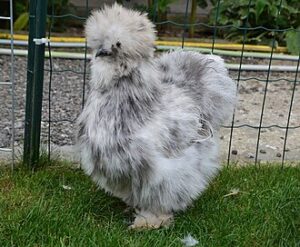
Bantams, including Silkies, Japanese and Polish, are small hens of about 0.5 to 1 kg. They eat about 55 to 70 g of feed a day, a little over half of a full-size hen.
Use the same layer feed with calcium as large hens, in a smaller amount, and smaller grit. Silkies cannot fly and need dry, sheltered housing, as their fluffy feathers soak through in rain.
Feeding desi hens
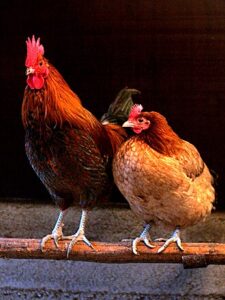
Desi hens are Pakistan's village chickens: hardy, good mothers and usually 1.2 to 1.8 kg. They lay about 60 to 120 eggs a year and are often free-ranged.
A free-ranging desi hen finds part of its food, but egg numbers rise noticeably with a layer feed or a mix of grain and some protein, plus calcium. Desi hens go broody often; a broody hen eats very little and needs food and water close to the nest.
Feeding Fayoumi hens

Fayoumi hens came from Egypt and are now common in Pakistan's backyard schemes. They are light (about 1.5 kg), active, heat-tolerant and lay about 150 eggs a year.
They do well free-ranging and on a layer feed with calcium. They are flighty, so a covered run keeps them safe.
Feeding Golden Misri hens
The Golden Misri is a crossbred, dual-purpose hen popular with backyard keepers in Pakistan. It is medium-sized and lays well.
Feed a layer feed with calcium, about 100 to 120 g a day in a coop. It tolerates heat reasonably well but needs shade and cool water in summer.
Feeding commercial layer hens
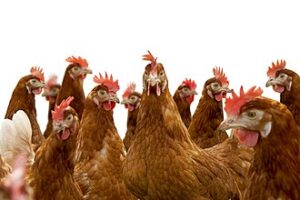
Commercial layers such as Lohmann and Hy-Line lay almost an egg a day, about 300 a year. They need a high-quality layer feed with 16 to 18% protein and 3.5 to 4% calcium all the time.
Do not dilute their feed with too much grain or kitchen scraps, or egg numbers and shell quality drop fast. In summer, heat stress cuts their laying: give cool water, shade and electrolytes.
Feeding Rhode Island Red hens

Rhode Island Reds are hardy dual-purpose hens of 2.5 to 3.5 kg that lay about 250 eggs a year. They eat more than desi hens because they are heavier.
Feed a layer feed with calcium, about 110 to 130 g a day in a coop. They handle cold well but need shade and water in summer.
Feeding Australorp hens
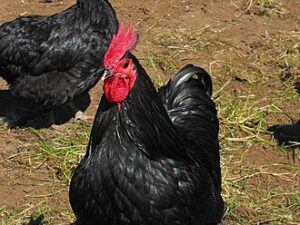
Australorps are black, heavy hens of 2.5 to 3.5 kg and excellent layers, about 250 eggs a year. They are calm and easy to keep.
Feed a layer feed with calcium, about 115 to 135 g a day. Their black feathers absorb heat, so shade and cool water are important in summer.
Feeding Aseel

Aseel are big, muscular birds native to the subcontinent, kept in Pakistan for show and pride. Males can reach 3 to 4 kg. They lay few eggs, often 40 to 70 a year.
They need a higher-protein feed and grain, about 120 to 140 g a day, and plenty of space. Aseel hens are excellent mothers.
How much feed does a hen eat?
A laying desi hen eats about 95 to 115 g of feed a day; heavier breeds such as the Aseel and Australorp eat more and bantams eat a little over half as much. Hens that free-range in a yard for most of the day find part of their food and need about 30% less.
Feed by stage: starter, grower, layer
- Chicks, 0 to 8 weeks: starter feed with 18 to 20% protein, available all day.
- Growers, 9 to 18 weeks: grower feed with 15 to 16% protein.
- Laying hens: layer feed with 16 to 18% protein and 3.5 to 4% calcium.
- Roosters: grower or all-flock feed with some grain, not layer feed, whose extra calcium can damage their kidneys.
- Hens not laying or broody: layer or grower feed.
Calcium, grit and kitchen scraps
Laying hens need calcium for strong shells: keep crushed, baked eggshells or shell grit in a separate bowl. Birds that eat whole grains also need grit. Kitchen scraps such as roti, rice and vegetable peels are fine as a small extra, under a tenth of the diet. Do not give mouldy roti, salty or spicy food, avocado or raw dry beans.
Hens in summer and winter
Above 35 °C, hens eat less, drink two to three times more and may lay fewer or thinner-shelled eggs. Give cool water in the shade, feed in the early morning and evening, and add electrolytes in heatwaves. In winter, short days reduce laying; that is normal.
Feeding a desi or mixed-breed rabbit

Desi and mixed-breed rabbits in Pakistan vary from 1.5 to 4 kg. Many are fed only carrots, cabbage or bread, which upsets the gut.
Give unlimited hay, a measured amount of pellets and a handful of leafy greens daily. Weigh your rabbit and enter its weight in the calculator for the right pellet amount.
Feeding a dwarf or Lionhead rabbit

Netherland Dwarf and Lionhead rabbits are small, 0.9 to 1.8 kg. They need only a small daily portion of pellets, about 15 to 30 g, and hay should be most of the diet.
Their short faces make them prone to dental problems, so unlimited hay is essential for wearing down teeth. Lionheads need regular brushing to prevent swallowed fur.
Feeding a Mini Lop or Dutch rabbit

Mini Lops and Dutch rabbits are medium, 1.5 to 2.7 kg, friendly and popular pets. They need unlimited hay, about 25 to 45 g of pellets and a handful of greens daily.
Lop-eared rabbits can get ear infections: check their ears weekly.
Feeding an Angora rabbit

Angoras are wool rabbits, 2.5 to 4 kg, with long, fine coats. They need daily grooming and plenty of hay to stop swallowed wool blocking the gut.
A higher-protein pellet helps wool growth. Angoras suffer badly in Pakistan's heat: keep their coat trimmed short in summer and keep them in a cool room.
Feeding a New Zealand White rabbit

New Zealand Whites are large white rabbits, 4 to 5.5 kg, often kept commercially in Pakistan. They need unlimited hay, about 50 to 90 g of pellets and plenty of greens daily.
Commercial rabbits are often fed pellets only, but pet New Zealands do better with lots of hay.
Feeding a Flemish Giant rabbit

Flemish Giants are the biggest rabbit breed, 6 to 9 kg, and grow until about 18 months. Growing rabbits should have unlimited hay and pellets until then.
Adults need about 75 to 150 g of pellets a day, unlimited hay and plenty of greens. Give a large, cool space in summer.
How much should I feed my rabbit?
Hay comes first: an adult rabbit should eat a pile of hay as big as itself every day, about 80% of its diet. On top of that, give about 12 to 20 g of pellets per kg of body weight and a handful of leafy greens. Growing rabbits under 7 months can have unlimited pellets and hay.
Hay and greens available in Pakistan
Dry grass hay or timothy hay is ideal for adults. Berseem and lucerne (alfalfa) are rich and good for young, pregnant and nursing rabbits, but too much makes adults fat and can cause bladder sludge. Good greens: dhania, podina, lettuce leaves, carrot tops, methi and small amounts of palak. Add one new green at a time over a few days.
Foods rabbits must not eat
Roti, bread, rice, biscuits, potato, onion, garlic, chocolate and sugary fruit in large amounts. Grass or weeds from a roadside or a sprayed lawn can carry pesticides.
Rabbits in Pakistan's summer
Rabbits handle cold well but suffer badly above 30 °C. Keep them in a shaded, airy room, give a frozen water bottle wrapped in cloth to lean against, and offer water in a heavy bowl as well as a bottle. A rabbit that is lying flat, breathing fast or has hot ears needs cooling at once.
How much should I feed my guinea pig?
Unlimited fresh hay, about 15 to 20 g of guinea pig pellets (around 2 tablespoons) and a cup of fresh vegetables a day for each adult. Young guinea pigs under 6 months can have unlimited pellets.
Vitamin C every day
Like people, guinea pigs cannot make their own vitamin C. Without it they get scurvy: sore joints, bleeding gums and a rough coat. Use pellets made for guinea pigs, not rabbit pellets, and give a vitamin C-rich vegetable daily. Adults need about 10 to 25 mg of vitamin C per kg of body weight a day, and young, pregnant or nursing guinea pigs need more. A slice or two of shimla mirch (20 to 30 g) covers most adults.
Safe vegetables in Pakistan
Daily: shimla mirch, dhania, lettuce leaves, cucumber and carrot tops. A few times a week: palak, broccoli and a little carrot or apple. Avoid potato, onion, garlic, roti and anything cooked.
Feeding a Syrian hamster

Syrian, or golden, hamsters weigh 100 to 175 g and must live alone. Each eats about 10 to 12 g of hamster pellets or mix a day; pellets or blocks are the better main food.
Add a small piece of fresh vegetable daily and a little plain protein twice a week. Syrians store food in their cheeks and in hidden stashes.
Feeding a dwarf hamster

Dwarf hamsters, including Roborovski, Campbell and winter white, weigh only 20 to 50 g. Each eats about 5 to 7 g of hamster pellets or mix a day; pellets or blocks are the better main food.
Campbell and winter white dwarfs are prone to diabetes, so keep fruit and sweet treats very rare. Give vegetables such as cucumber and broccoli instead.
How much should I feed my hamster?
A Syrian hamster eats about 10 to 12 g of food a day (about a tablespoon) and a dwarf hamster about 5 to 7 g. Make hamster pellets or blocks the main food: with seed mixes, hamsters pick out their favourite seeds and miss nutrients, so keep seeds as a small extra. Add a fingertip-size piece of fresh vegetable daily and a pea-size bit of boiled egg or plain chicken once or twice a week.
Safe and unsafe foods
Safe: cucumber, carrot, broccoli, a little apple without seeds, and plain cooked egg. Avoid citrus, onion, garlic, chocolate, almonds, sugary or salty snacks and sticky foods that can get stuck in the cheek pouches.
Feeding goldfish and koi
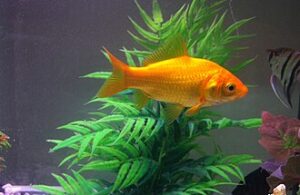
Goldfish and koi are cold-water fish kept in ponds and tanks across Pakistan. They are greedy eaters and will beg even when full, which leads to overfeeding.
Feed only what they finish in 2 minutes, once or twice a day in warm weather, and much less in cold water below 10 °C. Fancy goldfish do better on sinking pellets soaked for a few seconds.
Feeding tropical fish

Tropical fish such as guppies, mollies, platies, bettas and angelfish need warm water of 24 to 28 °C. Feed a small pinch of flake or micro-pellet food once or twice a day, with one fasting day a week.
Bettas need a betta pellet, about 2 to 4 pellets twice a day. Live or frozen food such as bloodworms is a good treat once or twice a week.
How much and how often should I feed fish?
Feed only what the fish finish in about 2 minutes, once or twice a day. In total that is roughly 1 to 2% of the fishes' body weight a day. Overfeeding is the most common cause of cloudy water and sick fish, because leftover food rots.
Water temperature and the seasons
Fish are cold-blooded, so how much they eat depends on the water temperature. Outdoor goldfish and koi in Lahore or Islamabad eat very little once water drops below 10 °C in winter: feed every few days, or stop below 6 °C. In Karachi and Lahore summers, water above 28 °C holds less oxygen, so feed less and add aeration and shade.
Tropical fish such as guppies, mollies and bettas need 24 to 28 °C all year, so use a heater in winter.
Feeding when you travel
Healthy adult fish can safely go 2 to 3 days without food. For a week away, ask someone to feed a small pinch every second day rather than leaving a large amount or a holiday block that fouls the water.
Frequently asked questions
How much should I feed a desi cat?
Most neutered adult desi cats of 3.5 to 4.5 kg need 60 to 75 g of dry food a day, depending on activity and the food's calories. Enter your cat's weight for the exact amount.
My street cat eats everything. Should I give more?
Give the calculated amount split into 3 or 4 small meals for the first two weeks. Cats that have been hungry often gulp food and vomit. If it stays thin after deworming, see a vet.
How much should a Persian cat eat?
An indoor neutered Persian of 4 kg needs about 200 to 240 kcal a day, roughly 55 to 70 g of dry food. Weigh it every month: Persians hide extra weight under their coat.
Why does my Persian vomit hair?
Swallowed fur from grooming. Brush daily, especially in spring and summer moult, and use a food with added fibre. Vomiting more than once a week, or with no hair, needs a vet.
Do Himalayans need special food?
No special food is needed, but a food for long-haired or indoor cats, with fibre for hairballs, suits most. Wet food once a day helps them drink more.
How much should a Himalayan kitten eat?
About two to three times as much per kg as an adult, split into 4 meals under 4 months and 3 meals up to a year. Use the kitten setting in the calculator and recalculate every week.
My Siamese looks thin. Is it underweight?
Feel the ribs: if they are easy to feel but not sharp, and the cat is lively, it is a normal Siamese shape. Sharp ribs and a visible spine mean it needs more food and a vet check.
Should a Siamese eat more than other cats?
Often a little more per kg, because they are active. Start with the calculator amount and adjust by 10% after two weeks.
How much should a British Shorthair eat?
A 5 kg neutered indoor British Shorthair needs about 230 to 280 kcal a day, roughly 65 to 80 g of a typical dry food.
How do I know if my British Shorthair is fat?
Their thick coat hides fat. Feel for the ribs and look for a waist from above. If you cannot feel ribs easily, choose "Overweight" and the calculator will set a slow weight-loss amount.
How much does a Maine Coon eat?
More than an average cat because of its size: a 7 kg adult typically needs 300 to 380 kcal a day, about 85 to 110 g of dry food. Enter its weight for the exact figure.
When should a Maine Coon switch to adult food?
Usually between 12 and 18 months. If your cat is still growing quickly at a year, stay on kitten food a little longer.
Do Bengals need more food than other cats?
Usually a little more per kg because they are very active. If yours gets bored and overeats, use food puzzles and play sessions instead of extra food.
My Bengal has loose stools. Is it the food?
Often it is a sudden change of food or rich treats. Go back to one food, change slowly, and see a vet if it lasts more than two days.
How much should a Ragdoll eat?
A 6 kg neutered indoor Ragdoll typically needs 270 to 320 kcal a day, about 75 to 90 g of dry food.
Are Ragdolls prone to obesity?
Yes, because they are large and quiet. Measure every meal and choose "Low" activity if your cat mostly sleeps.
How many times a day should I feed my cat?
Adult cats do well on two meals a day, morning and evening. Kittens under 4 months need 4 meals and kittens up to a year need 3. Some cats prefer to graze; that is fine if you measure the day's food in the morning and do not refill the bowl.
Can I give my cat milk?
Most adult cats are lactose intolerant and get loose stools from cow or buffalo milk. Give fresh water instead. Kittens that have lost their mother need kitten milk replacer, not doodh.
Why is the amount different from the feeding chart on the bag?
Bag charts are written for an average, active, unneutered cat. Most pet cats in Pakistan are neutered and live indoors, and need less. Use the result as a starting point, weigh your cat every 2 to 4 weeks and adjust by about 10% if it is gaining or losing weight.
Can my cat live on boiled chicken and rice?
Not for long. Chicken and rice lack calcium, vitamins and the right balance of taurine and fats, and cats fed only this can develop heart and eye problems. Use a complete cat food as the main meal and keep home food to about a tenth of the day.
How do I know if my cat is the right weight?
You should be able to feel the ribs easily under a thin layer of fat, see a waist from above and see the belly tuck up from the side. If you cannot feel the ribs, choose "Overweight" in the calculator and it will work out a weight-loss amount.
Where do I find the calories in my cat food?
Look on the bag for "metabolisable energy" or "calorie content", in kcal per kg or per 100 g. The calculator accepts both. If the bag does not list it, choose the analysis option and enter the protein, fat, fibre and moisture figures instead.
How much should I feed a desi dog?
A 20 kg desi dog that guards at night usually needs about 1,300 to 2,000 kcal a day, roughly 380 to 570 g of a typical dry food, depending on how hard it works. Use the calculator with its actual weight.
Can I feed my desi dog roti only?
It is common, but a roti-only diet lacks protein, fat and calcium. Mix a complete dog food with a little roti, or use the food as the main meal.
How much should a German Shepherd eat?
A 32 kg adult with normal activity typically needs 1,500 to 1,800 kcal a day, about 420 to 500 g of a typical dry food. Working guard dogs need more.
When should a German Shepherd puppy switch to adult food?
Around 12 to 18 months, when growth slows. Switching too early or overfeeding to make the puppy "big" can harm the joints.
Why is my Labrador always hungry?
Many Labradors are genetically driven to eat. Feed the calculated amount, use a slow-feeder bowl, and give vegetables such as carrot or cucumber as low-calorie treats.
How much should a Labrador eat?
A 30 kg neutered adult with daily walks typically needs 1,400 to 1,600 kcal a day, about 400 to 460 g of a typical dry food.
How much should a Golden Retriever eat?
A 30 kg adult with normal activity typically needs 1,400 to 1,600 kcal a day, about 400 to 460 g of a typical dry food.
Is fish oil good for Golden Retrievers?
Many owners use it for the coat and joints. Ask your vet for a dose and count it as part of the daily calories.
Can a Husky live in Pakistan?
Yes, with care: shade, a cool room in summer, plenty of water and exercise only in the cool hours. Never shave the double coat, which also protects against heat.
My Husky eats less in summer. Is that okay?
Yes, if its weight and energy stay normal. Offer food in the cool hours and see a vet if it stops eating for more than a day.
How much should a Rottweiler eat?
A 45 kg adult with normal activity typically needs 1,900 to 2,300 kcal a day, about 540 to 650 g of a typical dry food.
Should Rottweiler puppies eat a lot to grow big?
No. Their final size is set by genes. Overfeeding only makes them grow faster, which strains the hips and elbows.
How much does a Bully Kutta eat?
A lot: a 70 kg adult typically needs 2,600 to 3,200 kcal a day, about 750 to 900 g of a typical dry food. Use the calculator with its actual weight.
Should I give my Bully Kutta milk and eggs to make it bigger?
It will not change its final size and can cause loose stools and weight gain. A complete giant-breed food is enough.
Can a Gaddi live in Lahore or Karachi?
It can, but it struggles in the summer heat. Give shade, a cool place to lie, and exercise only early and late.
How much should a Gaddi eat?
A 45 kg working Gaddi typically needs 3,000 to 3,600 kcal a day. A pet Gaddi needs about half that.
How much should a Doberman eat?
A 38 kg adult with normal activity typically needs 1,700 to 2,000 kcal a day, about 480 to 560 g of a typical dry food.
Do Dobermans need high-protein food?
A good adult food with 24 to 28% protein suits most. Very active or working Dobermans may need a performance food.
How much should a Pit Bull eat?
A 22 kg adult typically needs 1,150 to 1,450 kcal a day, about 330 to 410 g of a typical dry food.
My Pit Bull scratches a lot. Is it the food?
It can be a food allergy, but fleas and mites are more common in Pakistan. Treat for parasites first. If the itching continues, plan a food trial with your vet: one new protein for about 8 weeks with no treats, table food or flavoured chews, then a test with the old food to confirm the cause.
How much should a working Malinois eat?
A 27 kg working Malinois typically needs 1,700 to 2,500 kcal a day. Weigh it every two weeks during heavy training.
Can a Malinois be fed only twice a day?
Yes. Feed a small meal in the morning and the main meal after work, at least an hour after hard exercise.
How much should a Beagle eat?
A 12 kg adult with normal activity typically needs 720 to 810 kcal a day, about 205 to 230 g of a typical dry food.
My Beagle steals food. What can I do?
Feed on a schedule, keep bins closed and counters clear, and use toys that release kibble to keep it busy.
How much should a Cocker Spaniel eat?
A 13 kg adult with normal activity typically needs 770 to 860 kcal a day, about 220 to 245 g of a typical dry food.
Why do Cocker Spaniels get ear problems?
Long, heavy ears trap moisture. Clean them weekly and keep them out of the food bowl.
How much should a Shih Tzu eat?
A 6 kg adult typically needs 430 to 480 kcal a day, about 120 to 140 g of a typical dry food.
Can a Shih Tzu eat wet food only?
It can, but dry food helps keep the teeth cleaner. A mix of both suits many Shih Tzus.
How much should a Pomeranian eat?
A 2.5 kg adult typically needs about 220 to 250 kcal a day, only about 65 to 70 g of a typical dry food.
My Pomeranian puppy is weak and shaky. What should I do?
It may have low blood sugar. If it is awake and can swallow, rub a little honey on its gums, then go to a vet at once. Never put anything in the mouth of a dog that is fitting or unconscious: keep it warm and get to a vet straight away.
How many times a day should I feed my dog?
Two meals a day for adults, 3 for puppies from 4 to 6 months and 4 for puppies under 4 months. Large, deep-chested dogs such as German Shepherds and Dobermans are safer on 2 to 3 smaller meals, with an hour of rest after eating.
Can dogs eat roti?
A little plain roti is not harmful, but it is mostly starch. A dog fed mainly on roti and milk often has poor skin, a dull coat and weak muscles. Use it only as a small extra on top of a complete dog food.
Are bones safe for dogs?
Cooked bones are not safe: they splinter and can block or tear the gut. Raw bones carry risks too: broken teeth, choking and blockages. Give a safe chew toy or dental chew instead.
How much should I feed a guard dog?
Usually more than a house pet of the same weight. Choose "Working" in the calculator for dogs on duty most of the night, check the body shape every two weeks, and adjust by about 10% at a time.
How much water does a dog need?
About 50 to 60 ml per kg a day, and much more in summer. A 30 kg dog can drink 2 litres or more on a hot day. Keep water available all the time and never limit it.
Why is the amount different from the feeding chart on the bag?
Bag charts are written for an average, active, unneutered dog. Use the calculator result as a starting point, weigh your dog every 2 to 4 weeks and adjust by about 10% if it is gaining or losing weight.
How much does a budgie eat a day?
About 5 to 7 g of seed or pellets, plus a small handful of fresh greens. For a pair, put about 1 tablespoon of seed in the bowl each day.
Can budgies eat fruit?
A little apple, guava or pomegranate is fine as a treat. Vegetables are better daily food because fruit is high in sugar.
How much should a lovebird eat?
About 7 to 10 g a day, roughly 2 teaspoons, plus fresh food. Breeding birds eat up to half as much again.
What should breeding lovebirds eat?
Their normal seed or pellets, plus soft food daily (boiled egg mashed with a little breadcrumb or soaked seed), greens and a calcium source.
How much seed does a finch eat?
About 2 to 4 g a day, half a teaspoon or so. Because finches are tiny, they cannot go long without food: check the bowl every day.
Can finches eat parrot seed?
Not large seeds. Finches need a small-seed finch mix they can crack.
How much should a cockatiel eat?
About 11 to 14 g of seed or pellets a day, plus fresh vegetables. Breeding and moulting birds need more.
My cockatiel only eats sunflower seeds. What can I do?
Mix in a little more of a balanced seed or pellet each day over a few weeks, offer fresh food in the morning when it is hungry, and limit sunflower.
How much does a ringneck eat?
About 14 to 18 g of seed or pellets a day, plus fresh fruit and vegetables.
Can ringnecks eat roti?
A small piece of plain roti occasionally is harmless, but it is not a proper food. Fresh vegetables, fruit and pellets are much better.
How much does an Alexandrine eat?
About 20 to 30 g of seed or pellets a day, plus fresh food.
Can Alexandrines eat chillies?
Yes, green and red chillies are a healthy favourite. Avoid salty, oily or spicy cooked food.
How much should an African grey eat?
About 30 to 45 g of pellets or seed a day, plus fresh food. Weigh your bird monthly to check it is stable.
Why does my African grey need calcium?
Greys are known for low blood calcium, which can cause weakness and seizures. Pellets, greens and a cuttlebone or calcium supplement help.
How much seed does my bird need a day?
About 15 to 20% of body weight for small birds such as budgies, lovebirds and finches, and 7 to 12% for larger parrots. The calculator works this out from the species and weight and adds more for moulting and breeding.
Can parrots eat hari mirch?
Yes. Birds do not feel the heat of chillies, and green and red chillies are a healthy, vitamin-rich food that most parrots love. Avoid chilli in salan, which also has salt and oil.
Can I give my bird roti or bread?
A small piece of plain roti now and then is harmless, but it has little nutrition and goes mouldy quickly. Never give bread soaked in milk or tea.
How long can a bird go without food?
Not long. Small birds can become seriously weak in 24 to 48 hours without food. If you travel, leave a friend to refill seed and water daily.
Do birds need grit?
Parrots, budgies and lovebirds shell their seeds and do not need grit; too much can block the crop. Finches and pigeons, which swallow seed whole, benefit from a small amount. All birds benefit from a cuttlebone or mineral block for calcium.
How much grain does a desi pigeon eat?
About 2 level tablespoons, 28 to 35 g, a day. Breeding pairs eat more.
What is the cheapest good diet for desi pigeons?
Wheat and bajra as the base with some moong or masoor, plus grit. Buying grain in bulk in season cuts the cost.
What should I feed high flyers before a contest?
A light feed of small grains such as bajra and kangni the day before, and a small breakfast on the day. Heavy pulses are better after the flight.
How do I help my flyers recover?
Give fresh water with electrolytes, a feed with more pulses, and a rest day.
How much does a racing homer eat?
About 35 to 45 g a day during racing, less in the off-season.
Should racing pigeons get vitamins?
A good mix usually covers the basics. Vitamins and electrolytes are useful during racing and moult, used as the pack says.
Do Lakha pigeons eat less?
Usually a little less per kg than flying breeds, because they are less active. Feed what they finish in 15 minutes.
How do I keep my fantail's tail healthy?
Good protein in the diet, especially during moult, a clean dry loft and perches that do not crush the tail.
How much does a King pigeon eat?
About 45 to 55 g of grain a day, more when feeding young.
Can King pigeons fly?
They can fly short distances but are not built for long flights. Give them a large aviary.
How much should I feed my pigeons a day?
About 28 to 35 g per bird for an average desi pigeon, more for heavy breeds and flying birds. The calculator works out the total for your flock and the monthly cost.
Can pigeons eat rice or roti?
A little cooked rice or roti will not hurt, but it spoils quickly and gives little protein. Whole grains and pulses are much better. Never leave soaked food out in summer.
What should I feed baby pigeons?
Nothing, if the parents are with them: both parents feed the young from their crop. Give the parents more food, extra pulses and fresh grit. Hand-feeding is only needed for orphaned squabs.
Do pigeons need grit?
Yes. Pigeons swallow grain whole and grind it in the gizzard with small stones. Keep a separate bowl of pigeon grit and minerals available at all times.
How much formula does a baby budgie need?
About 10% of its weight per feed: a 20 g chick needs about 2 ml.
When do budgie chicks start eating seed?
From about 4 to 5 weeks. Most are fully weaned by 6 weeks.
How much should a baby lovebird eat?
About 10 to 12% of its weight per feed: a 40 g chick needs about 4 to 5 ml.
When do lovebird chicks wean?
Usually between 6 and 8 weeks. Weigh daily to make sure weight stays steady.
How much formula does a cockatiel chick need?
About 10 to 12% of its weight per feed: a 60 g chick needs about 6 to 7 ml.
When should a cockatiel chick wean?
Between 7 and 9 weeks. Do not rush it: cockatiels that wean too early often lose weight.
How much should a baby ringneck eat?
About 10 to 12% of its weight per feed: an 80 g chick needs about 8 to 10 ml.
Can I feed a baby ringneck chana dal or bread?
No. These do not have the right nutrition and can sour in the crop. Use a hand-feeding formula.
How much formula does an Alexandrine chick need?
About 10 to 12% of its weight per feed: a 150 g chick needs about 15 to 18 ml.
When do Alexandrine chicks wean?
At about 10 to 12 weeks, sometimes later.
How much formula does a baby African grey need?
About 10 to 12% of its weight per feed: a 300 g chick needs about 30 to 36 ml.
Why is my grey chick losing weight?
A small loss before weaning is normal. More than 10%, or a chick that seems weak, needs an avian vet.
Can I use cerelac or dalia for a baby parrot?
It is common in Pakistan, but cerelac, dalia and similar cereals do not have the protein, calcium and vitamins a growing parrot needs, and chicks raised on them often grow weak with poor feathers. Use a proper hand-feeding formula made for parrots.
How hot should the formula be?
39 to 41 °C. Test with a thermometer, not your finger. If you use a microwave, stir very well, because hot spots can burn the crop.
How do I know when to feed again?
When the crop is almost empty. If it has not emptied within 4 to 5 hours, or the chick looks sleepy and fluffed, take it to an avian vet: a slow crop can be serious.
Why is my chick refusing food?
Usually the formula is too cold or too thick, or the chick is ready to wean. If a young chick refuses two feeds in a row or is losing weight, see a vet.
How much does a bantam eat?
About 55 to 70 g of feed a day.
Do Silkies need special food?
No. A normal layer feed with calcium suits them. They lay fewer eggs than large hens.
How much feed does a desi hen eat?
About 95 to 115 g a day kept in a coop, or about 65 to 80 g if it free-ranges most of the day.
How can I get more eggs from desi hens?
A layer feed with 16 to 18% protein, calcium in a separate bowl, clean water and about 14 to 16 hours of light a day.
How much does a Fayoumi hen eat?
About 90 to 110 g of feed a day in a coop, less when free-ranging.
Are Fayoumis good in Pakistan's heat?
Yes, they are one of the most heat-tolerant breeds kept here.
How many eggs does a Golden Misri lay?
Usually around 160 to 200 eggs a year with good feed and care.
Can Golden Misri hens free-range?
Yes. Reduce their bagged feed by about a quarter to a third if they forage most of the day.
How much feed does a commercial layer eat?
About 105 to 120 g a day.
Why are my layer's eggs thin-shelled?
Usually too little calcium, heat stress or old age. Give layer feed with shell grit on the side, and cool water in summer.
How much does a Rhode Island Red eat?
About 110 to 130 g of feed a day.
Are Rhode Island Reds good for eggs or meat?
Both. They are good layers and the cockerels grow to a good size.
How much does an Australorp eat?
About 115 to 135 g of feed a day in a coop.
Do Australorps cope with heat?
Moderately. Keep them in shade during the afternoon and give cool water.
How much does an Aseel eat?
About 120 to 140 g of feed a day.
What protein level do Aseel need?
About 16 to 18%, more for growing birds.
How much feed do 10 hens need a month?
About 30 to 35 kg of layer feed for 10 laying desi hens kept in a coop, and less if they free-range. Enter your number of birds and bag price in the calculator for the exact amount and cost.
Why have my hens stopped laying?
Most often moult, short winter days, broodiness, heat stress or a feed too low in protein or calcium. Keep feeding a good layer feed and they usually come back into lay.
Can hens eat roti and rice?
In small amounts, yes. Too much starch fills them up without the protein and calcium needed for eggs, so egg numbers fall. Keep scraps under a tenth of the day.
How much water do hens drink?
About 200 to 250 ml each a day in mild weather and up to twice that in summer. Use several drinkers in the shade and clean them daily.
How much should I feed a desi rabbit?
A 2.5 kg adult needs about 30 to 50 g of pellets a day, plus unlimited hay and greens.
Can my rabbit eat cabbage?
A little, but cabbage and cauliflower can cause gas. Leafy greens such as dhania and lettuce leaves are better.
How much does a dwarf rabbit eat?
About 15 to 30 g of pellets a day, plus unlimited hay and a small handful of greens.
Why are my dwarf rabbit's teeth overgrown?
Usually too little hay. Teeth grow all the time and need constant chewing to stay short. See a vet if it drools or eats less.
How much does a Mini Lop eat?
About 25 to 45 g of pellets a day, plus unlimited hay and greens.
Do lop rabbits need different food?
No, but they need regular ear checks.
How much does an Angora eat?
About 35 to 60 g of pellets a day, plus unlimited hay.
Can Angoras live in Pakistan's heat?
Only with a short-trimmed coat, a cool room and constant shade in summer.
How much does a New Zealand White eat?
About 50 to 90 g of pellets a day, plus unlimited hay.
Can I feed berseem to my New Zealand White?
Yes, as part of the diet. Mix it with grass hay rather than feeding berseem alone.
How much does a Flemish Giant eat?
About 75 to 150 g of pellets a day for adults, plus a large amount of hay.
How long does a Flemish Giant grow?
Until about 18 months. Keep feeding growth amounts until then.
Can rabbits eat carrots?
Only as a small treat. Carrots are sweet and high in sugar. Carrot tops are better as a daily green.
Is berseem good for rabbits?
For young, pregnant and nursing rabbits, yes. Adults should get mostly grass hay, with berseem only as a small part of the diet.
How long can a rabbit go without eating?
A rabbit that stops eating or pooping for 12 hours is an emergency. The gut can stop working (gut stasis), so see a vet the same day.
How much water does a rabbit drink?
About 100 to 150 ml per kg a day, more in summer. Rabbits drink more from a bowl than from a bottle.
Can guinea pigs eat rabbit pellets?
No. Rabbit pellets do not have added vitamin C, and some contain additives that are not suitable for guinea pigs.
How many guinea pigs should I keep?
At least two. Guinea pigs are herd animals and get lonely and stressed alone.
Do guinea pigs need water in a bottle?
A bottle or a heavy bowl both work. Change the water daily and check the bottle spout is not blocked.
How much does a Syrian hamster eat?
About 10 to 12 g of hamster pellets or mix a day, about a tablespoon.
Can Syrian hamsters eat fruit?
A little apple without seeds once or twice a week is fine.
How much does a dwarf hamster eat?
About 5 to 7 g of hamster pellets or mix a day, 1 to 2 teaspoons.
Can dwarf hamsters eat sweets?
No. They are prone to diabetes, so avoid sugary foods and keep fruit very rare.
Why does my hamster hide its food?
Hoarding is normal. Check the stash once a week and remove fresh food that has gone off, but leave dry food alone.
When should I feed my hamster?
In the evening, when it wakes up. Hamsters are active at night.
Can hamsters live together?
Syrian hamsters must live alone. Some dwarf hamsters can share if raised together, but fights are common.
How much should I feed goldfish?
A pinch they finish in 2 minutes, once or twice a day. In winter ponds, much less.
Why is my goldfish floating upside down?
Often a swim bladder problem from overfeeding or floating dry food. Fast it for a day, then feed soaked or sinking food.
How much should I feed a betta?
About 2 to 4 betta pellets twice a day.
Do tropical fish need a heater in Pakistan?
In winter, yes, in most cities. In summer, keep the tank out of direct sun so it does not overheat.
How do I know if I am overfeeding my fish?
Food left on the bottom after 5 minutes, cloudy water, a bad smell or algae growing fast. Feed less and remove leftovers.
Should I soak goldfish pellets?
Soaking dry pellets for a few seconds stops them swelling in the gut, which can cause floating and balance problems in fancy goldfish.
Can I feed fish roti or rice?
No. It sinks, rots and clouds the water, and it has little of the protein fish need.
How often should I change the water?
Change about a quarter of the water each week, treated with a water conditioner that removes both chlorine and chloramine. Letting water stand overnight removes chlorine but not chloramine.
How we calculate
For cats and dogs we use the standard veterinary method: first the resting energy requirement (70 × body weight in kg to the power 0.75), then a factor for age, neutering, activity, pregnancy or nursing. Overweight pets are fed for their target weight. The calories are then turned into grams using the energy of the chosen food. For Zoran foods we use the manufacturer's figure or, where the pack does not state one, a figure calculated from its analysis with the NRC 2006 method and marked as calculated. If you enter a bag analysis yourself, the calculator uses the modified Atwater factors (3.5, 8.5 and 3.5 kcal per gram of protein, fat and carbohydrate). Birds, hens, rabbits, guinea pigs, hamsters and fish use species-based feeding guidelines. Each result has a "How we worked this out" line with the numbers used.
These results are a starting point, not veterinary advice. Ask a vet before big diet changes, especially for growing, pregnant, nursing, overweight, underweight or unwell animals. Questions about a Zoran food? Message us on WhatsApp 0300 1595321.